
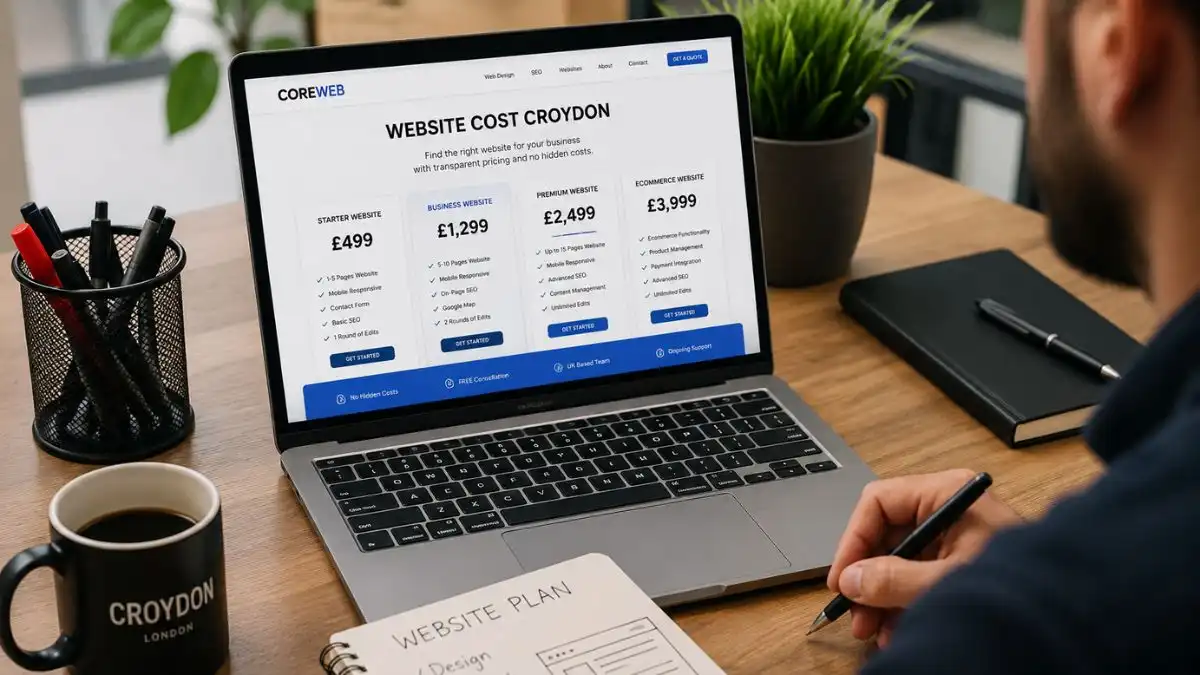
For most service businesses, the useful question is not simply “Should I show my prices?” It is “What pricing information does a serious customer need before they can decide whether to contact me?”
If the service has a fixed scope, an exact price may be the clearest answer. If every job varies, a starting price, realistic range, minimum fee, example project or explanation of the pricing factors may be more accurate.
Publishing nothing is also a choice. It can preserve flexibility, but it can create uncertainty and attract enquiries from people whose budget was never realistic.
Before changing your pricing page, run the wider website conversion audit. Price is only one possible reason visitors hesitate.
Should you put prices on your website?
| Type of work | Best pricing format to consider | Why |
|---|---|---|
| Standard product or fixed service | Exact price | The customer can understand the scope before buying. |
| Packages with defined limits | Package prices | Makes comparison straightforward. |
| Variable but predictable service | Starting price or range | Gives budget context without pretending every job is identical. |
| Highly bespoke project | Minimum fee + pricing factors + examples | Shows commercial position while keeping the final quote honest. |
| Diagnostic work first | Price the first stage | Turns an unscoped project into a clear first commitment. |
Why customers want pricing information
Price is part of the buying decision, even when it is not the only factor.
A visitor is usually trying to answer questions such as:
- Is this service remotely within my budget?
- Is this a low-cost, mid-market or premium supplier?
- What does the price include?
- Will there be ongoing charges?
- Do I need a quote or can I buy/book now?
If the website answers none of those questions, the customer has to create their own assumptions.
Some will enquire anyway. Some will assume the service is too expensive. Others will contact several competitors first because those sites were easier to compare.
When exact prices make sense
Exact pricing is strongest when the scope is genuinely standard.
Examples might include:
- a fixed consultation;
- a standard treatment;
- a defined maintenance package;
- a product with clear options;
- a workshop or training session with a set format;
- a specific website package with tightly defined inclusions.
Exact prices reduce ambiguity only when the customer can also see what is included.
“Website package £999” is less useful if the customer cannot tell whether hosting, copy, images, SEO setup, revisions or support are part of the package.
When a starting price works better
A starting price is useful when there is a genuine minimum scope.
For example:
Projects from £1,500
That tells the customer the minimum commercial level without claiming a £5,000 project can be delivered for £1,500.
A good starting price should sit beside an explanation of what normally increases the cost.
- number of pages;
- design complexity;
- content creation;
- ecommerce;
- booking or CRM integrations;
- migration work;
- custom functionality.
This is the same reason our UK website cost guide focuses on scope rather than one universal figure.
When a price range is useful
Ranges work when most projects fall into a reasonably predictable band.
For example:
Most projects of this type are £2,000–£4,000.
A range is only useful if it reflects real work. An enormous range such as “£500–£25,000” tells the customer almost nothing.
Explain the typical differences between the bottom and top of the range.
| Lower end | Higher end |
|---|---|
| Existing content supplied | Copywriting and content planning |
| Standard integrations | Custom integrations |
| Few page templates | Several unique page types |
| Simple migration | Complex URL and content migration |
| Limited training | Team training and documentation |
When you should not publish one headline price
Do not force an exact number onto work that cannot be scoped responsibly without more information.
This can apply to:
- large construction projects;
- complex legal work;
- custom software;
- large ecommerce builds;
- multi-location SEO;
- specialist repair where the cause is unknown;
- projects that require discovery first.
In those cases, publish the pricing method instead.
You can explain:
- the minimum project value;
- what determines cost;
- whether discovery is charged;
- how long a quotation takes;
- what information is needed;
- whether ongoing fees apply.
The visitor still receives useful commercial information without being misled by a false fixed price.
The strongest alternative: price the first step
Some complex services become easier to buy when the first stage has a clear price.
For example:
- paid site survey;
- diagnostic session;
- strategy workshop;
- technical audit;
- discovery phase;
- initial consultation.
The customer is not being asked to commit to an unknown total immediately. They are buying the work needed to define the next decision.
Does publishing prices bring worse leads?
It can reduce the number of enquiries. That is not automatically a bad result.
If people who cannot afford the service stop contacting you, the total enquiry count may fall while the proportion of commercially realistic enquiries rises.
Measure:
- total enquiries;
- qualified enquiries;
- quotes issued;
- sales won;
- average project value;
- time spent handling unsuitable leads.
A pricing change should be judged by business quality, not only form volume.
Could competitors undercut you?
Yes. Competitors can see public prices.
They can also request a quote, ask a customer or estimate your position from the market.
Do not publish pricing simply because “transparency is always better”. Instead ask whether the customer benefit of clarity is greater than the commercial downside of revealing the figure.
For many small service businesses, a range or starting price gives useful context without publishing a complete rate card.
Will a price make you look too expensive?
A price without context can.
Put the number beside the scope and value.
For example, instead of:
Package: £2,500
show:
- who the package is for;
- what is included;
- what is excluded;
- the expected process;
- support or warranty where relevant;
- what makes the higher price different from a cheaper alternative.
The goal is not to justify every pound with marketing language. It is to make comparison fair.
Our guide to cheap versus professional websites shows why two prices can describe very different levels of work.
Should you show VAT and mandatory fees?
Pricing should not create a misleading impression of what the customer will actually pay.
Be clear about whether VAT applies and whether essential charges sit outside the headline figure.
Examples of costs that may need explanation include:
- delivery;
- booking fees;
- installation;
- hosting;
- licences;
- materials;
- call-out fees;
- minimum order values.
If a fee is unavoidable for the typical customer, hiding it until late in the journey may damage trust even if the number itself is reasonable.
Where should pricing appear?
Put pricing information close to the decision it supports.
Service page
Usually the strongest option when the visitor is already evaluating one service.
Dedicated pricing page
Useful when there are several packages, tiers or substantial pricing explanations.
Homepage
A short commercial signal can work well, such as a starting price, but the homepage rarely needs the complete rate structure.
FAQ
Useful for supporting detail, but do not hide the only meaningful price information inside an accordion because you are uncomfortable displaying it.
Near the call to action
Helpful when price uncertainty is one of the final barriers to enquiry.
How to write pricing for a bespoke service
Use this structure:
- Commercial position: “Projects start from £X.”
- Typical range: “Most clients spend £X–£Y.”
- Price drivers: list the factors that change the total.
- Example: describe one realistic scope and its approximate cost.
- Next step: explain what you need to quote accurately.
You do not need all five for every business. The structure simply makes sure the customer is not left with a number and no context.
Pricing examples by business type
| Business | Possible format |
|---|---|
| Hair salon | Exact service prices |
| Plumber | Call-out fee + common job examples + quote for complex work |
| Accountant | Monthly packages or starting fees by service |
| Web designer | Starting project price + typical ranges + scope factors |
| Builder | Minimum job value + example projects + survey/quote process |
| Consultant | Workshop/day rate or defined first-stage fee |
| Emergency service | Call-out/diagnostic fee and any known surcharges |
Common pricing-page mistakes
- showing a “from” price that almost nobody can actually buy;
- using permanent fake discounts;
- publishing an old price in several places and forgetting to update one;
- showing packages with no explanation of the differences;
- hiding mandatory costs until checkout or quotation;
- making the cheapest package deliberately unusable;
- using “contact us” when a useful range could be stated;
- changing prices without updating ads, PDFs and email templates.
How to test whether publishing prices helps
Do not judge the change from opinions alone.
Before publishing, record a baseline:
- service-page visits;
- enquiries;
- qualified enquiries;
- quotes issued;
- sales won;
- average sales value.
Then publish the pricing information and allow enough time for a meaningful sample.
Look for changes in lead quality as well as lead volume.
A lower conversion rate can still produce a better commercial result if the business wastes less time and closes a higher proportion of enquiries.
How pricing fits into the wider website journey
Price information cannot rescue a weak offer.
The service page still needs:
- a clear explanation of the service;
- credible proof;
- scope and boundaries;
- a process;
- an easy next step;
- a working contact route.
If your pricing is clear but enquiries remain weak, return to the broader lead-generation journey rather than assuming the price is automatically wrong.
Should you put prices on your website? Decision checklist
Show an exact price when:
- the scope is standard;
- the customer understands what they receive;
- the total is predictable;
- buying or booking can happen without discovery.
Show a starting price or range when:
- scope varies within known boundaries;
- you want to signal budget level;
- you can explain the variables honestly.
Explain the pricing method instead when:
- the scope cannot be known without inspection or discovery;
- one figure would be misleading;
- the first stage can be defined more accurately than the final project.
A pricing disclosure ladder for businesses that are not ready to publish exact fees
Some businesses avoid pricing because they think the only options are “publish the full rate card” or “say nothing”. There are several useful steps between those extremes.
- Commercial position: explain whether the service is budget, mid-market or premium in practical terms.
- Minimum commitment: publish the smallest project or call-out you accept.
- Starting price: show the genuine lowest price for a realistic scope.
- Typical range: show where most suitable customers actually spend.
- Example projects: connect a real scope to a realistic cost.
- Full fixed pricing: use when the offer is standard enough to buy or book directly.
Moving one step up this ladder can reduce uncertainty without forcing the business into false precision.
Use pricing to reduce sales friction, not to replace the sales conversation
Good pricing content should make the first conversation more useful. If the customer already understands the likely budget, your team can spend less time explaining basic cost and more time discussing fit, scope and timing.
Track whether published pricing changes the questions prospects ask. Useful signs include fewer “roughly how much?” messages, more detailed project briefs and a higher proportion of enquiries that fit the service.
Review pricing whenever the underlying offer changes
Prices become misleading when the service changes but the website does not. Review pricing after changes to labour, supplier costs, package inclusions, minimum project scope, VAT status, software licences or delivery model.
Also search the rest of the site for old figures. Blog posts, FAQs, PDFs and old landing pages can continue showing outdated prices long after the main service page has been corrected.
Website pricing FAQs
Does putting prices on a website increase conversions?
It can reduce uncertainty and filter unsuitable enquiries, but there is no universal guarantee that it increases the raw number of leads. Measure qualified enquiries and sales, not only form submissions.
Should a bespoke service show a price?
It does not need one exact figure. A starting price, realistic range, minimum fee, example cost or explanation of the price drivers can still help the buyer.
Should I hide prices if competitors are cheaper?
Not automatically. Explain what your price includes and who the service is designed for. Hiding the number does not remove the customer’s need to compare value.
Is “contact us for a quote” enough?
Sometimes, especially when work genuinely cannot be scoped in advance. It is stronger when the page also explains the minimum commitment, main cost factors and quotation process.
Where should I put prices on a service website?
Usually on the relevant service page or a dedicated pricing page, with a short commercial signal on the homepage where useful. Put the information close to the decision it supports.
