Web Design & Digital Growth | 📞 07821 004213 | Open 24/7

SEO vs Google Ads for Local Businesses in 2026: Which Strategy Actually Wins?
SEO vs Google Ads for local businesses in 2026: compare costs, lead quality, AI search impact, and which strategy delivers stronger long-term ROI.
Toufik Beladi
5/18/20265 min read
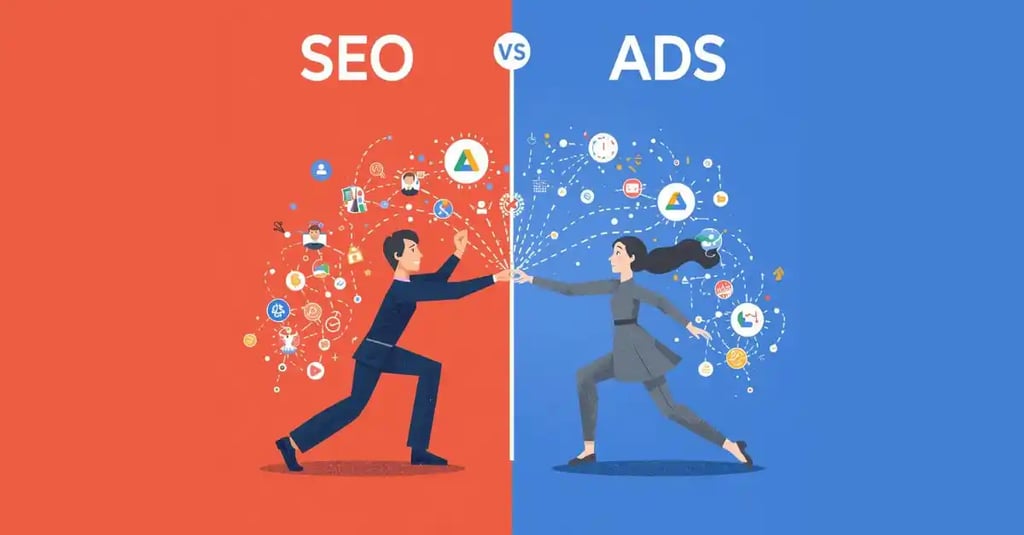
Local businesses are under more pressure than ever in 2026.
Google search is changing fast. AI-generated search summaries are reducing clicks. Advertising costs are rising across many industries. At the same time, business owners want faster returns from every marketing dollar they spend.
That is why one question keeps coming back across retail, restaurants, grocery, healthcare, home services, packaging, and local B2B sectors:
Should local businesses focus on SEO or Google Ads?
For years, businesses often treated them as competing strategies.
That approach is fading now.
In reality, the strongest local businesses in 2026 are using both — but for very different reasons.
Google Ads is becoming the fast engine for immediate leads and short-term visibility.
SEO is becoming the long-term system that builds local authority, lowers customer acquisition costs, and strengthens visibility across Google Maps, AI search, and organic rankings.
The real challenge is understanding when each one works best.
What is the difference between SEO and Google Ads?
SEO helps businesses appear organically in Google search results, Google Maps, and local listings without paying for every click.
Google Ads allows businesses to pay for visibility at the top of search results through pay-per-click advertising or Local Services Ads.
Both can generate customers.
But the business model behind them is completely different.
With SEO, traffic can continue long after the work is done.
With Google Ads, visibility usually disappears the moment spending stops.
That difference matters more now because local advertising has become far more competitive.
Why local businesses are struggling with Google Ads costs
Google Ads still works very well.
The problem is cost.
Local businesses are now competing against:
national chains
lead-generation companies
marketplaces
franchise networks
AI-optimized advertisers
That competition is driving up click prices across many industries.
Some of the hardest-hit sectors include:
plumbing
dental clinics
HVAC
legal services
grocery delivery
packaging suppliers
retail technology
local repair services
In some cities, businesses may spend heavily just to receive a handful of qualified leads.
For smaller local operators, that pressure is becoming difficult to maintain month after month.
A local packaging distributor or independent grocery supplier often cannot outspend larger competitors forever.
Why local SEO is becoming more valuable again
SEO takes longer to build, but its long-term value is increasing.
One major reason is the way Google search itself is changing.
Search is no longer only about blue website links.
Google now pushes users toward:
Maps
AI-generated summaries
review-driven rankings
local recommendations
mobile discovery
Businesses with stronger local SEO are appearing across multiple areas of the search ecosystem at the same time.
That includes:
Google Maps
organic rankings
AI Overviews
“near me” searches
local recommendation panels
This creates ongoing visibility without paying for every visitor.
For businesses with recurring demand, that becomes extremely powerful over time.
Google Business Profiles are now critical
One of the biggest local SEO shifts in 2026 is the growing importance of Google Business Profiles.
Many customers now discover businesses directly through Maps before visiting a website.
That means buyers are comparing:
reviews
photos
operating hours
response speed
local reputation
proximity
inside Google itself.
A strong Google Business Profile now works almost like a second homepage.
For restaurants, supermarkets, clinics, repair businesses, wholesalers, and retail suppliers, this visibility can directly influence local trust and conversion rates.
Why consumers still trust organic rankings more
Paid ads attract clicks.
But organic visibility often creates stronger trust.
Most consumers understand that ads are sponsored placements.
Organic rankings feel earned.
That matters especially in sectors where customers compare options carefully before buying.
Examples include:
supermarkets
healthcare
financial services
packaging manufacturers
local B2B suppliers
restaurants
specialty retail
Businesses ranking organically often receive stronger long-term engagement because users already view them as established local operators.
The rise of Local Services Ads (LSAs)
One of the biggest local-search changes in 2026 is the expansion of Local Services Ads.
These are the “Google Guaranteed” or “Google Screened” listings appearing above traditional search ads in many service categories.
They are now heavily influencing mobile local search.
LSAs are especially important for:
plumbers
electricians
locksmiths
cleaners
roofers
appliance repair companies
Unlike standard PPC campaigns, many LSAs operate on a pay-per-lead model instead of pay-per-click.
That changes the economics significantly.
For some businesses, LSAs now outperform traditional Google Ads completely.
When Google Ads works better than SEO
Google Ads still dominates in several situations.
Emergency services
Urgent customer intent favors paid visibility.
Someone searching:
“emergency plumber near me”
“24-hour locksmith”
“same-day appliance repair”
usually wants the fastest available solution.
Paid ads can generate calls within minutes.
New business launches
A newly opened supermarket, restaurant, clinic, or retail supplier cannot always wait six months for SEO growth.
Google Ads creates immediate visibility during launch periods.
Seasonal campaigns
SEO is rarely fast enough for:
promotions
holiday campaigns
clearance events
limited-time launches
local events
Paid advertising performs much better here.
When SEO becomes the stronger investment
SEO becomes more powerful over time.
Businesses with consistent monthly demand often benefit the most.
Examples include:
supermarkets
dentists
wholesalers
packaging companies
gyms
local consultants
grocery distributors
retail technology providers
These businesses need steady visibility every month, not only during advertising campaigns.
Strong SEO can reduce long-term marketing costs significantly.
How AI search is changing local visibility
AI-generated search summaries are becoming one of the biggest disruptions in local marketing.
Google increasingly answers user questions directly inside search results.
That means some businesses are losing clicks even when they rank well.
This is creating a new challenge:
zero-click local discovery.
Businesses now need stronger:
reviews
branded authority
website trust
local relevance
structured business information
to remain visible inside AI-powered search experiences.
This is one reason local SEO investment is rising again.
Businesses want stronger authority signals that AI systems are more likely to trust and surface.
The biggest mistake local businesses make
Many local businesses rely entirely on one channel.
That creates risk.
Businesses depending only on Google Ads may face:
rising acquisition costs
weaker margins
unstable lead flow
Businesses relying only on SEO may struggle with:
slow growth
delayed lead generation
limited early visibility
The businesses growing fastest in 2026 are usually combining both systems strategically.
Why hybrid marketing is becoming the dominant strategy
The strongest local marketing systems now combine:
fast paid acquisition
long-term organic authority
This hybrid model works because each channel solves a different business problem.
Google Ads handles:
immediate leads
promotions
urgent searches
launch traffic
testing new markets
SEO handles:
long-term visibility
Maps authority
lower acquisition costs
AI search positioning
recurring local discovery
Many businesses now use Google Ads first to identify which keywords actually convert.
Then they build SEO strategies around those proven search terms.
Over time, this helps reduce dependence on paid advertising.
Real-world example: how businesses are balancing both
A local restaurant may use Google Ads during holiday periods or major promotions to increase reservations quickly.
At the same time, it invests in local SEO, reviews, and Maps visibility to maintain steady year-round traffic.
A packaging supplier may run paid campaigns targeting industrial keywords while building long-term SEO content around regional packaging demand and logistics services.
A supermarket technology provider may use ads to target immediate B2B leads while strengthening organic visibility through industry content and local search authority.
These businesses are not choosing one side anymore.
They are building layered visibility.
Which strategy delivers better ROI in 2026?
Short term:
Google Ads usually delivers faster measurable returns.
Long term:
SEO often delivers stronger overall ROI.
But the real answer depends on:
business type
competition level
local market conditions
cash flow
customer urgency
A new local retailer may need ads immediately.
An established wholesaler may benefit more from SEO expansion.
A healthcare clinic may require both simultaneously.
The strongest businesses are no longer treating SEO and Google Ads as separate marketing systems.
They are combining them into one long-term growth strategy.
What happens next?
Local search competition is expected to become even more aggressive during the remainder of 2026.
AI-generated search experiences will likely continue reducing traditional website clicks while increasing the importance of local authority, reviews, and trusted business profiles.
Google Ads costs may also continue rising across highly competitive local sectors.
That pressure is expected to push more businesses toward hybrid acquisition strategies combining paid visibility with long-term SEO investment.
Businesses relying only on ads may face growing customer acquisition costs over the next few years.
Meanwhile, companies building strong local SEO foundations now could gain a major long-term advantage as AI-powered local discovery continues evolving.
Editor’s Note: This article is based on current 2026 local search trends, digital advertising developments, evolving AI search behavior, and broader marketing shifts affecting local businesses across retail, grocery, service, and B2B industries worldwide.
Contact
info@corewebuk.com
07821 004213
Copyright © 2026. Core Web UK All rights reserved.
Follow