Web Design & Digital Growth | 📞 07821 004213 | Open 24/7

Website Speed Optimisation Services UK (2026)
Boost your website speed today with UK optimisation services. Tips and fixes small businesses can apply immediately.
Toufik Beladi
11/19/20255 min read
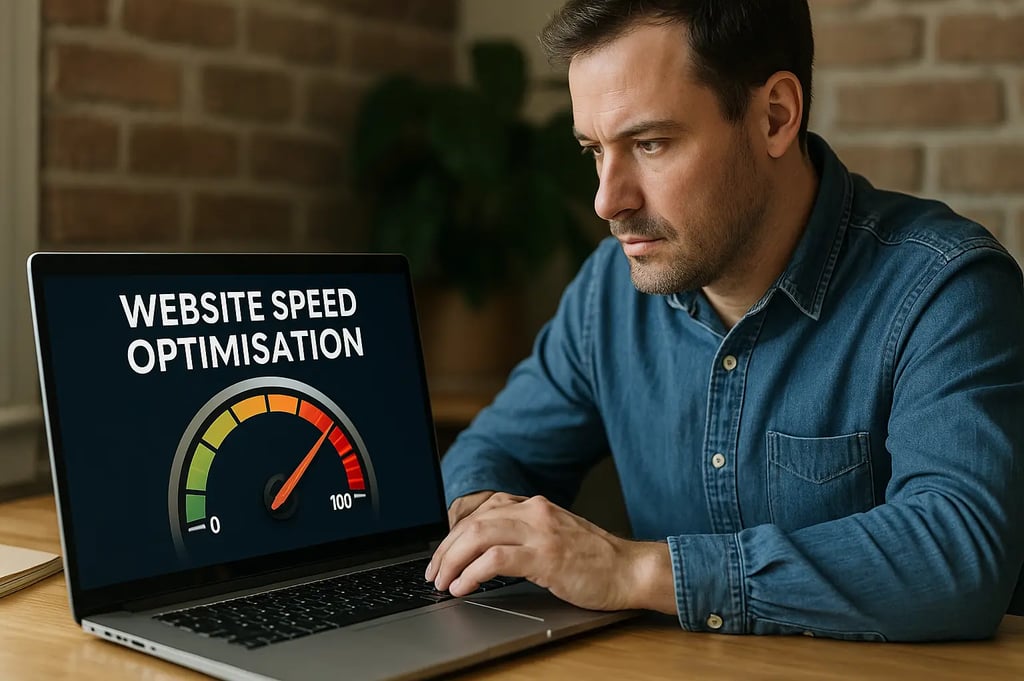
Most people think a slow website is just “annoying.”
But for a small business in the UK, a slow website quietly kills enquiries, damages trust, and increases the cost of every ad you run.
This guide explains — in simple English — everything you need to know before choosing a website speed optimisation service. You’ll learn what slows a site down, how to check your speed properly, what you can fix yourself, and when it’s easier (and cheaper) to let a specialist handle it.
If you own a small business, run a WordPress site, or manage bookings, sales or leads online, this will help you understand exactly what’s going wrong and how to fix it.
1. What “speed optimisation” actually means (simple explanation)
A website speed optimisation service is a set of improvements that make your pages load faster — especially on mobile.
But the real meaning is this:
Speed optimisation is removing anything that slows customers down when they try to see your content.
To customers, speed is trust.
If your website takes too long to load, customers think:
the business is old
the site is unsafe
the service is poor
the business might not even be real
Google thinks the same. That’s why speed impacts SEO, bounce rate, and conversion.
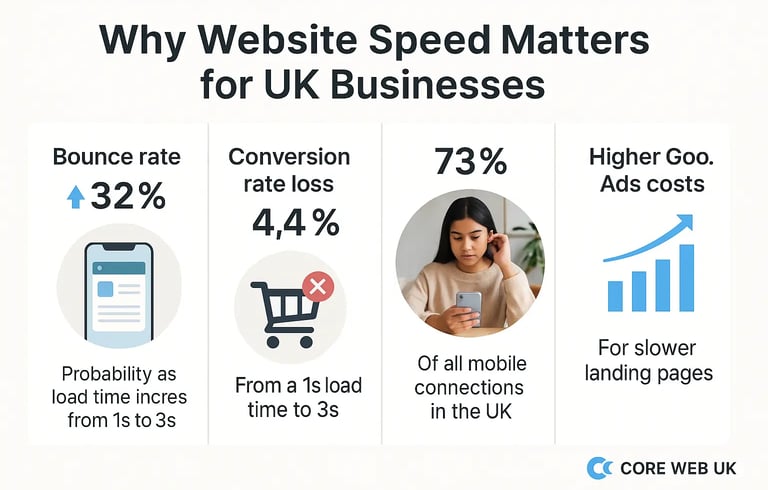
2. Why slow speed is a real problem for UK businesses
Speed affects more than you think. A slow site leads to:
• Fewer enquiries
People leave before seeing your phone number or contact form.
• Lower conversions
Your offers appear too slowly on mobile.
• Higher ad costs
Google Ads charge more when your landing pages perform badly.
• Poor SEO performance
Google prefers sites that load fast on real phones.
• Lost trust
A slow page feels unprofessional, even if the business isn’t.
This is why more companies now buy a website speed optimisation service at the same time as buying a new website.
3. How to check your speed properly (no technical skills needed)
You only need one or two tools.
Option 1: PageSpeed Insights
Search “PageSpeed Insights” → click Analyse.
Focus on:
Mobile score
Largest Contentful Paint (LCP)
First Input Delay (FID)
Cumulative Layout Shift (CLS)
Don’t worry about the names. Look at the colours:
Green = Good
Orange = Needs improvement
Red = Poor
Option 2: GTmetrix
Simple pass/fail with a clear waterfall chart.
Option 3: Ask your developer… or send it to a specialist
Many business owners send the screenshots to whoever handles their site and simply ask:
“Can you explain what’s causing the slow speed?”
A good website speed optimisation service will check these for you.
4. The top reasons your website is slow (UK business version)
Most small business websites load slowly because of just a few things.
4.1 Large, uncompressed hero images
The photo at the top of your page is usually too big.
4.2 Heavy page builders
Tools like Elementor, Divi or old themes load unnecessary code.
4.3 Too many plugins
Every plugin adds scripts, CSS and bloat.
4.4 Cheap shared hosting
£2–£4/month plans struggle during busy hours.
4.5 Poor caching setup
No proper caching means the server rebuilds the page for every visitor.
4.6 Too many third-party scripts
Chat widgets, booking tools, pop-ups, tracking, marketing apps — all slow the load.
A proper website speed optimisation service removes or reorganises all of this so customers see your content faster.
5. Quick fixes you can try yourself (safe for beginners)
These are simple, zero-risk actions.
5.1 Compress your images
Use a free tool online → reduce file sizes → upload again.
5.2 Remove unnecessary homepage elements
No sliders. No autoplay videos. No huge banners.
5.3 Delete unused plugins
Deactivate → check the site → delete if nothing breaks.
5.4 Reduce pop-ups
Move any pop-ups so they appear after the main content loads.
5.5 Ask your hosting company for an upgrade
Upgrading to a better plan (or different provider) often cuts your load time instantly.
If these don’t help, you’ll need a deeper website speed optimisation service.
6. What a professional speed optimisation service actually includes
A good provider won’t “install a plugin and run.”
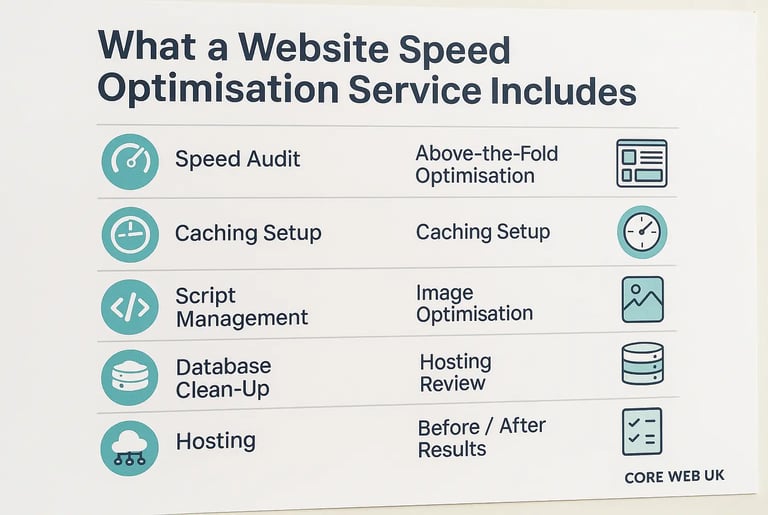
A real website speed optimisation service includes:
6.1 Full speed audit
Shows what’s slow, why, and what needs changing.
6.2 Above-the-fold optimisation
Makes sure the first screen loads instantly.
6.3 Correct caching setup
Server-side + browser caching combined.
6.4 Script and CSS optimisation
Reducing unused code
Deferring unnecessary scripts
Cleaning theme bloat
Prioritising visible content
6.5 Image strategy
WebP format
Correct sizes
Lazy loading below the fold
6.6 Database clean-up
Removes years of clutter from revisions and unused data.
6.7 Hosting review
Checks if your server is actually holding your site back.
6.8 Retesting and proof
Before/After screenshots
Before/After PageSpeed
Before/After loading experience
Any serious website speed optimisation service should show real measurable improvements, not vague promises.
7. Costs: How much does speed optimisation usually cost?
These are typical UK ranges:
Small business website: £150–£350
WordPress business site: £250–£500
E-commerce (WooCommerce): £450–£900
Ongoing optimisation & care plan: £25–£75/month
You don’t need to spend thousands.
Most UK sites improve drastically with a structured, one-off service.
8. When to stop DIY and hire a specialist
Here’s the rule:
If your mobile score is still red after trying basic fixes, it’s time for help.
You should also consider a website speed optimisation service if:
You run ads (slow pages burn budget)
Your homepage loads in more than 3 seconds
Your site is built with Elementor or Divi
Your hosting is cheap shared hosting
Your site brings enquiries or bookings
You feel overwhelmed by technical steps
Your developer keeps saying “it’s fine” but customers complain
Speed is either helping you win clients or quietly losing them.
9. Real example: how one UK business doubled conversions
A London plumbing company had:
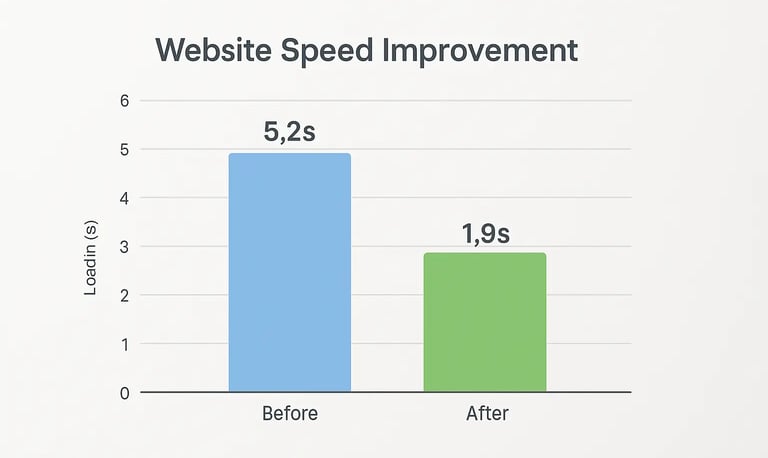
Mobile LCP of 5.2s
Heavy Elementor design
23 plugins
Huge hero image
Extra scripts loading before content
After a proper speed optimisation:
LCP dropped to 1.9s
Plugins reduced from 23 → 12
Images compressed
Scripts deferred
Hosting upgraded
Caching configured
Conversions increased by 38% in 30 days.
No new website. No redesign. Just speed.
This is the power of a good website speed optimisation service.
10. FAQ — Speed Optimisation for UK Businesses
Is speed really that important?
Yes. A fast website converts better and ranks better.
Do I need a new website?
In 80% of cases, no. Optimisation is enough.
How long does it take?
A good service normally takes 24–72 hours.
What if my site breaks during optimisation?
A professional uses a staging copy to avoid risk.
Can this improve SEO?
Improved speed supports SEO, especially if you’re already close to page one.
Does this work for WordPress only?
It works for any platform, but WordPress benefits the most.
Final takeaway
A website speed optimisation service is not a luxury.
It’s one of the simplest ways to:
lower bounce rates
increase enquiries
reduce ad spend
improve SEO
make your business feel more trustworthy
Most UK small businesses only need a one-off optimisation to fix years of problems.
Subscribe to our newsletter
Contact
info@corewebuk.com
07821 004213
Copyright © 2026. Core Web UK All rights reserved.
Follow