
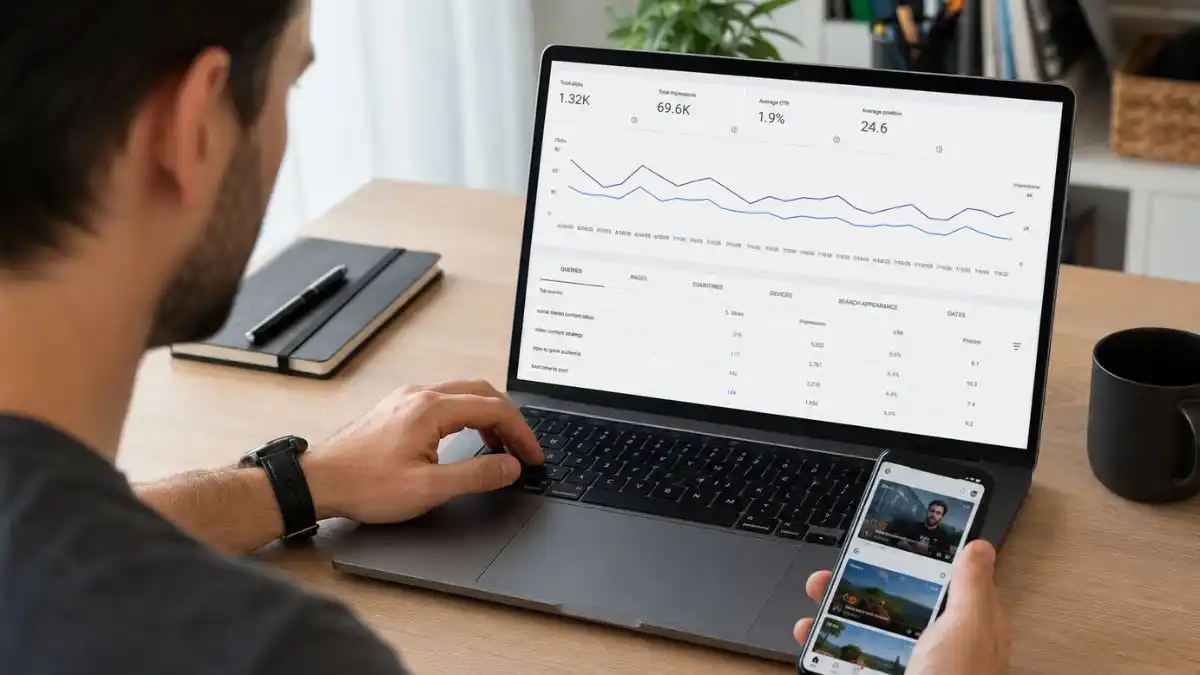
Google has introduced a new Search Console property type that allows creators, publishers and businesses to measure how content from Instagram, TikTok, X and YouTube performs across Google Search, Discover and Google News.
The platform properties feature was announced on 7 July 2026 following an earlier experiment. Google is introducing it gradually, so it may not appear in every Search Console account immediately.
The change expands Search Console beyond websites. Creators without their own website can now see how people discover their social posts and videos through Google. Businesses using social channels as part of their local marketing can also compare that visibility with their wider social media strategy.
Each Instagram account, TikTok account, X profile or YouTube channel can be added as a separate Search Console property. Businesses or publishers managing several accounts will need to create and verify an individual property for each one.
The Performance report provides total clicks, impressions, average click-through rate and average search position. If those numbers look confusing, our guide to Google impressions versus clicks explains what they mean in practice. Users can filter the information to identify which posts appear most frequently and which Google searches generate traffic.
The data can also be sorted by individual post or search query and exported for analysis in another platform.
A separate Insights report provides a high-level view of recent traffic trends, leading posts and the ways people are finding an account through Google. Search Console Achievements will record growth milestones, including new click thresholds reached during the previous 28 days.
Performance information may include traffic from Google Search, Discover and Google News. Discover and Google News reports will appear only when content receives traffic from those services.
The feature measures discovery through Google rather than activity inside each social platform. It will not, for example, report how many times a video was displayed to users within TikTok or YouTube.
An Instagram story that appears in Google results can generate an impression. If someone selects it from those results, Search Console records a click. Google will also count a click when a video is opened through its video viewer.
This distinction allows creators to separate Google visibility from the reach reported by the social platforms themselves. A post could perform strongly within Instagram or TikTok but receive limited traffic from Google, while another post could attract search clicks despite having lower engagement on its original platform.
Users can add a platform property through the Search Console verification page or the property selector. They must choose one of the four supported platforms and complete the required authorisation steps.
Verification can be completed through a direct platform login or, in some cases, an existing website property connected with the account. Google will periodically check ownership to keep the connection secure.
Access to reporting will pause if an external login expires or the connection is lost. Users can restore access by completing verification again, without waiting for the property’s existing data to accumulate from the beginning.
The new reporting could help publishers identify which social posts attract search traffic and which topics generate visibility outside the original platform. Businesses can also compare the Google performance of their website content with videos and posts published elsewhere.
For small businesses that rely mainly on social profiles, platform properties provide access to Search Console data without requiring a standalone website. The reports could show whether product demonstrations, service information or instructional videos are appearing for relevant searches.
Google has presented platform properties as a measurement feature and has not announced an associated change to how social content is ranked.
The company will continue rolling out the feature over the coming weeks and is collecting feedback through Search Console and the Google Search Central Community. It has not confirmed when the rollout will reach every account or whether support will expand beyond the four initial platforms.
Further details are available through the Google Search Central announcement and Search Console documentation.
Why platform reporting can help content teams
When Search Console can show more platform activity, businesses get a wider view of how content is discovered. That can help teams see whether social content supports website visibility.
The useful question is not simply where an impression came from. It is whether that visibility leads people towards useful pages, enquiries or sales.
- Compare website and social activity.
- Track the pages people visit next.
- Look for topics that perform well across channels.
- Keep reporting tied to business goals.
