
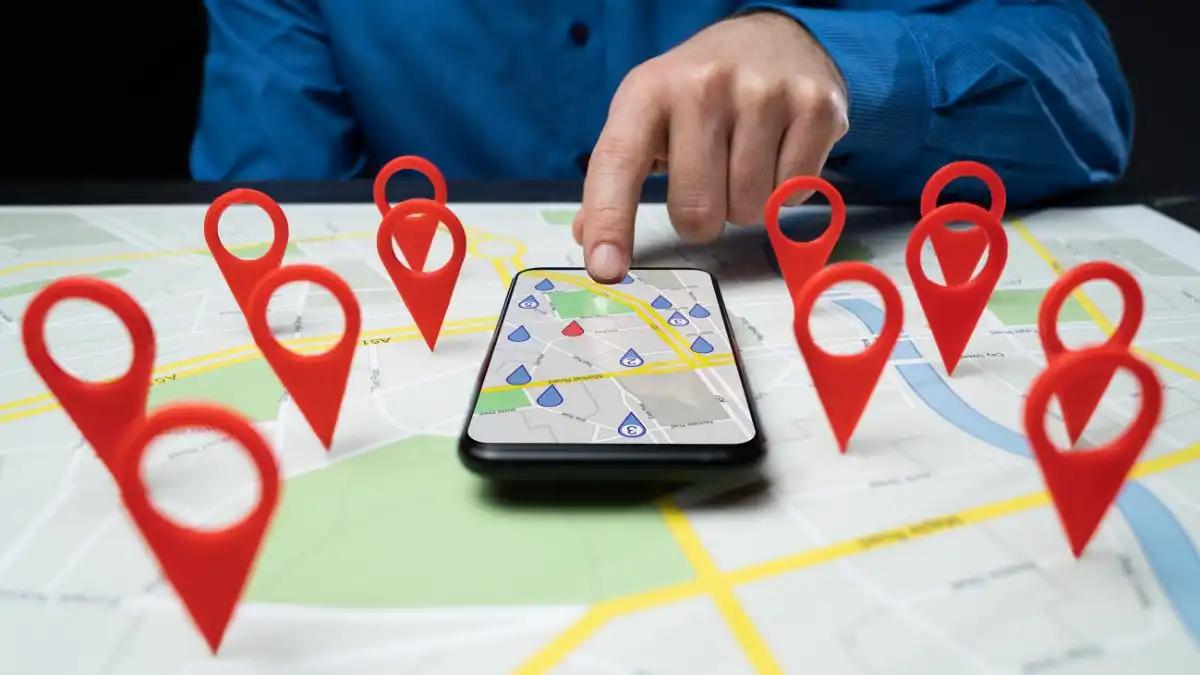

Local SEO is the process of improving a business’s visibility for searches connected to a real location or service area. It helps people find nearby businesses through Google Search and Google Maps when they are looking for a product or service in a particular place.
For a small business, local SEO usually combines a well-optimised website, an accurate Google Business Profile, genuine reviews, useful local content and consistent business information.
Local SEO at a glance
- It focuses on searches with local intent.
- Google Business Profile is a major part of local visibility.
- Google says local results are mainly based on relevance, distance and prominence.
- Your website still matters because it explains services and locations in more detail.
- Reviews and accurate business information can strengthen trust.
- No agency can guarantee a specific Maps or organic position.
What is local SEO?
Local SEO helps a business become easier to find when somebody searches for a service or product near a particular place.
Examples include:
- plumber Croydon
- web designer Bromley
- restaurant near me
- SEO company Richmond
- emergency locksmith Camden
These searches are different from broad informational queries because the user is often looking for a nearby provider rather than a general explanation.
How does Google rank local results?
Google says local results are mainly determined by relevance, distance and prominence.
- Relevance is how well the business matches the search.
- Distance considers how far the business is from the searcher’s location or the location used in the query.
- Prominence considers how well known the business is, using information that can include links and reviews.
Google explains these factors in its official local ranking guidance.
What is the local map pack?
For many local searches, Google displays a map-based group of businesses alongside ordinary organic results.
The exact layout can vary, but these results usually draw heavily on Google Business Profile information.
That is why a business with a strong website but a neglected Business Profile can still struggle to capture local visibility.
Google Business Profile and local SEO
Your Business Profile should accurately represent the business.
Important fields include:
- business name
- primary category
- address or service area
- telephone number
- opening hours
- website
- services or products
- photos
- reviews
Keep the profile current. Incorrect hours, old contact details or misleading location information create problems for both customers and search systems.
For a deeper explanation, see our guide to Google Business Profile and local SEO.
Does the website still matter for local SEO?
Yes.
The Business Profile gives Google structured information about the company, but the website gives much more context about services, expertise, prices, locations and customer needs.
Strong local websites usually make it easy to understand:
- what the business does
- where it operates
- who the service is for
- what makes the business credible
- how to contact or buy
Should every service have its own page?
Important, genuinely distinct services usually deserve their own focused page.
A plumber might separate leak detection, boiler repair and emergency plumbing because the customer intent and required information differ.
Do not create separate thin pages for every tiny keyword variation.
Our landing page SEO guide explains how to structure service pages around search intent.
Do location pages help?
They can, when the business genuinely serves the area and the page provides useful local information.
A strong location page should do more than replace one town name with another. Useful local elements may include service coverage, travel or response information, local examples, relevant customer evidence and details that genuinely differ by area.
Do not create fake office locations or misleading local-business schema simply to target more towns.
Do reviews matter?
Yes. Reviews can influence customer decisions and Google says review quantity and positive ratings can contribute to local prominence.
Ask real customers for honest reviews. Never buy reviews or create false feedback.
Replying professionally can also show that the business is active and engaged.
What are local citations?
A local citation is a mention of a business’s core details on another website, such as a reputable directory or industry listing.
Citations can help reinforce business information, but quantity is not the goal. Relevant, accurate listings are more useful than creating hundreds of low-quality directory entries.
What is NAP consistency?
NAP usually refers to name, address and phone number.
Your core business details should be accurate across important sources. Minor formatting differences are not usually the issue; genuinely conflicting information is.
How important is website speed?
Performance matters for users and is part of overall page experience.
A local customer on mobile should not have to wait for a heavy page to become usable before they can find the phone number or submit an enquiry.
See our guide to website speed and Core Web Vitals.
Does social media help local SEO?
Social media can support brand awareness, customer engagement and discovery, but it is not a replacement for local SEO.
A business can have a strong Facebook or Instagram presence and still be difficult to find when somebody searches Google for the service.
Use each channel for the job it does best rather than expecting one platform to cover the entire customer journey.
Does local SEO help with AI search?
Yes, because many of the same signals help search systems understand the business.
Google’s current guidance for AI features says established SEO practices remain relevant and specifically recommends keeping Business Profile information up to date.
There is no special AI schema that guarantees a local business will be mentioned.
Our AI search visibility guide explains the broader approach.
How long does local SEO take?
There is no fixed timeline.
Results depend on the website’s current condition, competition, location, existing reputation and how much work is required.
Some corrections can take effect quickly, while meaningful competitive growth usually requires consistent work over time.
Can you guarantee local rankings?
No.
Google controls its own results, and distance alone can change what different searchers see.
A responsible SEO provider can improve relevance, technical quality, profile accuracy, content and reputation signals, but cannot guarantee a specific position.
A beginner local SEO checklist
- Claim and verify the correct Google Business Profile.
- Choose the most accurate primary category.
- Keep phone, hours and website details current.
- Create clear pages for important services.
- Add useful location content where genuinely relevant.
- Ask real customers for honest reviews.
- Fix conflicting business details on important listings.
- Improve mobile usability and website speed.
- Use contextual internal links.
- Measure qualified enquiries, not just rankings.
Bottom line
Local SEO is about making a real business easier to understand, find and trust in the places it genuinely serves. The strongest strategy combines an accurate Google Business Profile with a useful website, genuine customer evidence and clear local relevance.
If you want professional help with this work, see Core Web UK’s SEO services.