
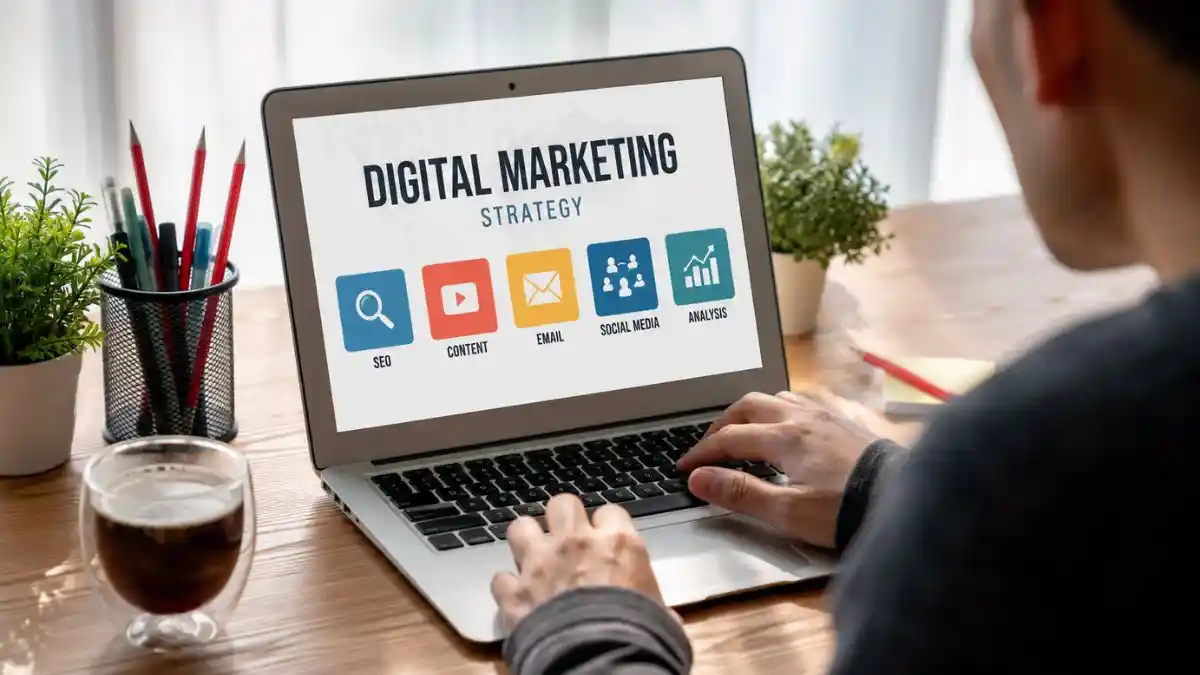

Small businesses have never had more ways to reach customers online. They have also never faced more competition.
Search engines are changing because of artificial intelligence. Social media algorithms shift constantly. Online advertising costs continue to rise. At the same time, customers expect businesses to have professional websites, useful content and fast responses across every digital channel.
For many small businesses, the challenge is no longer deciding whether to invest in digital marketing. The real question is where to spend time and money to achieve the best results.
The good news is that effective digital marketing in 2026 does not require a massive budget. It requires choosing the right channels, understanding customer behaviour and building a strategy that combines several marketing tools rather than relying on just one.
What Is Digital Marketing?
Digital marketing is the use of online channels to promote products and services, generate leads and build relationships with customers.
These channels include:
- Websites
- Search engines
- Social media
- Email marketing
- Online advertising
- Content marketing
- Video platforms
For small businesses, digital marketing is often more affordable and measurable than traditional advertising because every click, visit and conversion can be tracked.
Why Digital Marketing Matters More Than Ever
Customers increasingly start their buying journey online.
Whether they are looking for a local plumber, a software provider, a retailer or a restaurant, most consumers now search online before making a purchase decision.
A business without a strong digital presence risks becoming invisible to potential customers.
Digital marketing also allows small businesses to compete with much larger companies. A well-optimised website, useful content and targeted advertising can help a local company reach highly relevant audiences without spending millions on marketing.
Do Small Businesses Still Need a Website?
Absolutely.
Some businesses rely heavily on social media, but platforms can change algorithms or limit organic reach at any time. A website remains the only digital asset that a business fully controls.
A professional website offers several advantages:
- Builds credibility
- Provides information around the clock
- Generates leads
- Improves search visibility
- Supports online sales
- Acts as the centre of all marketing activity
In many cases, a website is the first impression a customer has of a business.
Poor design, slow loading times or outdated information can quickly damage trust.
Does SEO Still Work in 2026?
Yes, but SEO has changed.
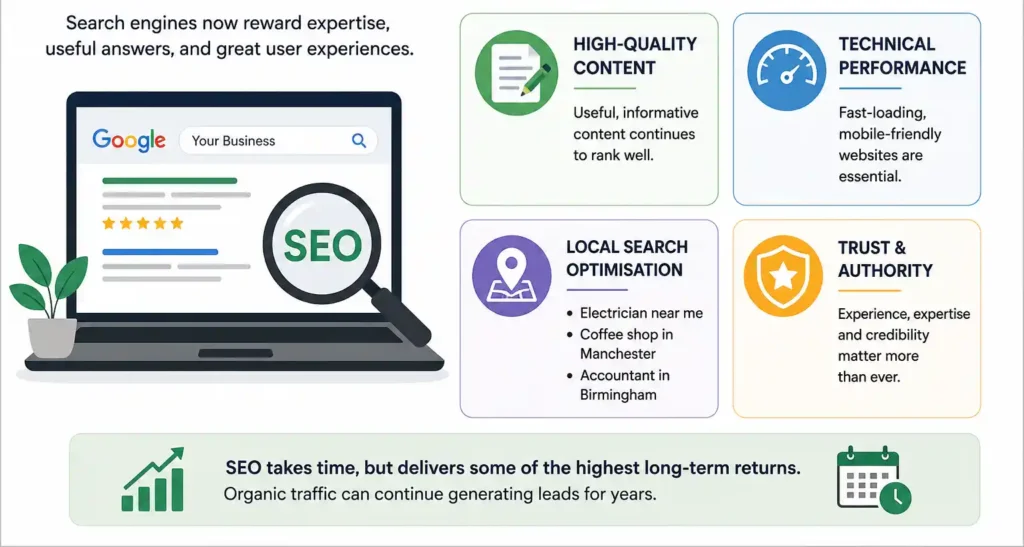
Search engine optimisation is no longer just about keywords. Search engines increasingly reward businesses that demonstrate expertise, answer customer questions and provide useful experiences.
Successful SEO now focuses on:
High-quality content
Businesses that publish useful and informative content continue to perform well in search results.
Technical performance
Fast-loading, mobile-friendly websites remain essential.
Local search optimisation
Local businesses benefit from appearing in searches such as:
- Electrician near me
- Coffee shop in Manchester
- Accountant in Birmingham
Trust and authority
Search engines increasingly value experience, expertise and credibility.
SEO takes time, but it often delivers some of the highest long-term returns because organic traffic can continue generating leads for years.
Are Google Ads Worth It?
For many businesses, yes.
Google Ads can generate traffic almost immediately.
Unlike SEO, which may take months to deliver results, paid advertising can place a business at the top of search results within hours.
Google Ads are particularly useful for:
- Service businesses
- E-commerce stores
- Seasonal campaigns
- New product launches
- Lead generation
However, advertising costs have increased significantly in recent years.
Small businesses should focus on:
- Targeting specific keywords
- Monitoring conversion rates
- Improving landing pages
- Avoiding broad, expensive campaigns
Paid advertising works best when combined with strong websites and quality content.
Which Social Media Platforms Matter Most?
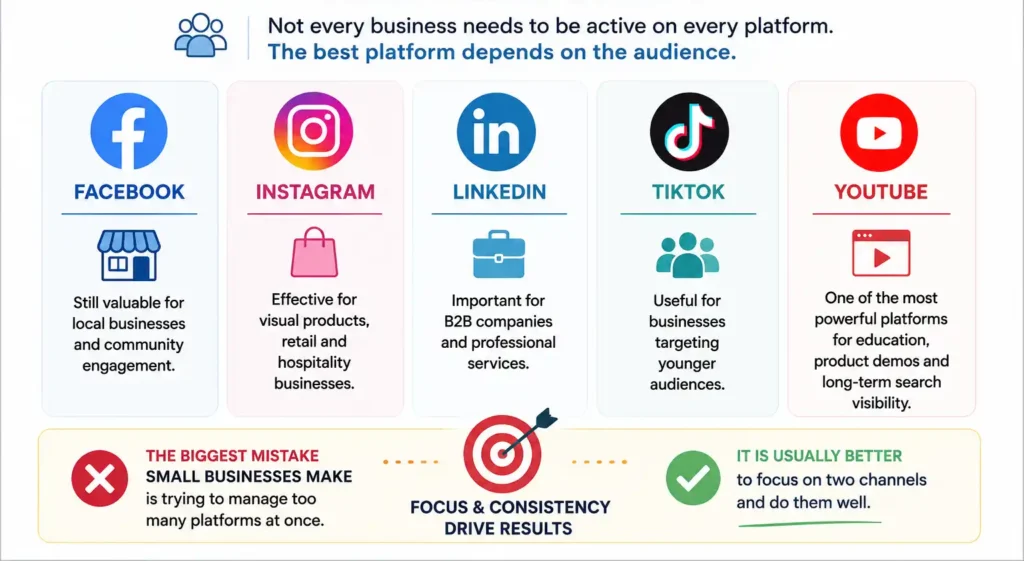
Not every business needs to be active on every platform.
The best platform depends on the audience.
Still valuable for local businesses and community engagement.
Effective for visual products, retail and hospitality businesses.
Important for B2B companies and professional services.
TikTok
Useful for businesses targeting younger audiences.
YouTube
One of the most powerful platforms for education, product demonstrations and long-term search visibility.
The biggest mistake small businesses make is trying to manage too many platforms at once.
It is usually better to focus on two channels and do them well.
Is Email Marketing Still Effective?
Email remains one of the highest-return marketing channels available.
Unlike social media, businesses own their email lists and can communicate directly with customers.
Email marketing works particularly well for:
- Customer retention
- Product launches
- Promotions
- Newsletters
- Event announcements
Even with the rise of artificial intelligence and social platforms, email continues to deliver strong results because it provides direct access to existing customers.
How Is AI Changing Digital Marketing?
Artificial intelligence is transforming nearly every area of marketing.
Businesses increasingly use AI tools to:
- Create content ideas
- Generate images
- Analyse data
- Personalise campaigns
- Automate customer service
- Improve productivity
At the same time, AI-powered search experiences are reducing website clicks for some publishers and businesses.
This means companies need to focus more on:
- Brand recognition
- Original content
- Customer loyalty
- First-party data
- Building direct relationships
AI is becoming an important tool, but it is not replacing the need for human expertise and authentic communication.
How Much Should a Small Business Spend on Digital Marketing?
There is no single answer.
Many businesses allocate between five and ten per cent of revenue to marketing, although this varies significantly by industry and growth stage.
The most important factor is not the size of the budget but how effectively it is used.
A smaller budget invested consistently in the right channels often outperforms larger, poorly targeted campaigns.
Which Digital Marketing Channels Deliver the Best Results?
| Channel | Cost | Speed of Results | Best For |
|---|---|---|---|
| SEO | Medium | Slow | Long-term growth |
| Google Ads | High | Fast | Leads and sales |
| Social Media | Low-Medium | Medium | Brand awareness |
| Email Marketing | Low | Fast | Customer retention |
| Website | Medium | Long-term | Credibility and conversions |
| Content Marketing | Medium | Medium-Long | Authority and trust |
The strongest strategies combine several channels rather than relying on just one.
The Biggest Digital Marketing Mistakes Small Businesses Make
Ignoring SEO
Many businesses focus entirely on social media and miss valuable search traffic.
Having No Website Strategy
A website without clear goals rarely delivers results.
Depending on One Channel
Over-reliance on a single platform increases risk.
Neglecting Analytics
Businesses cannot improve what they do not measure.
Publishing Inconsistent Content
Digital marketing works best when efforts are maintained over time.
Building a Digital Marketing Strategy That Works
Successful businesses usually follow a simple framework:
- Build a professional website.
- Improve search visibility through SEO.
- Create useful content.
- Build an email list.
- Use social media strategically.
- Invest in paid advertising when appropriate.
- Measure performance and adjust regularly.
No single channel guarantees success.
Digital marketing works best when each channel supports the others.
What Happens Next?
The future of digital marketing will likely be shaped by artificial intelligence, greater personalisation and increasing competition for online attention.
Small businesses that invest in high-quality websites, useful content and direct customer relationships are likely to be in the strongest position.
The companies that succeed in 2026 will not necessarily be those with the largest marketing budgets.
They will be the businesses that understand their customers, choose the right channels and build trust consistently across every digital touchpoint.